Craftable Project: Chord Wheel
I made this tool to help teach the fundamentals of music theory. It has major scales, minor scales, and the diatonic chords for each. I iterated on the design throughout the summer of 2025. Now, I share it with you. Learn with it, teach with it, or put it on a shelf to look pretty. This design is a Mr. Dan original.
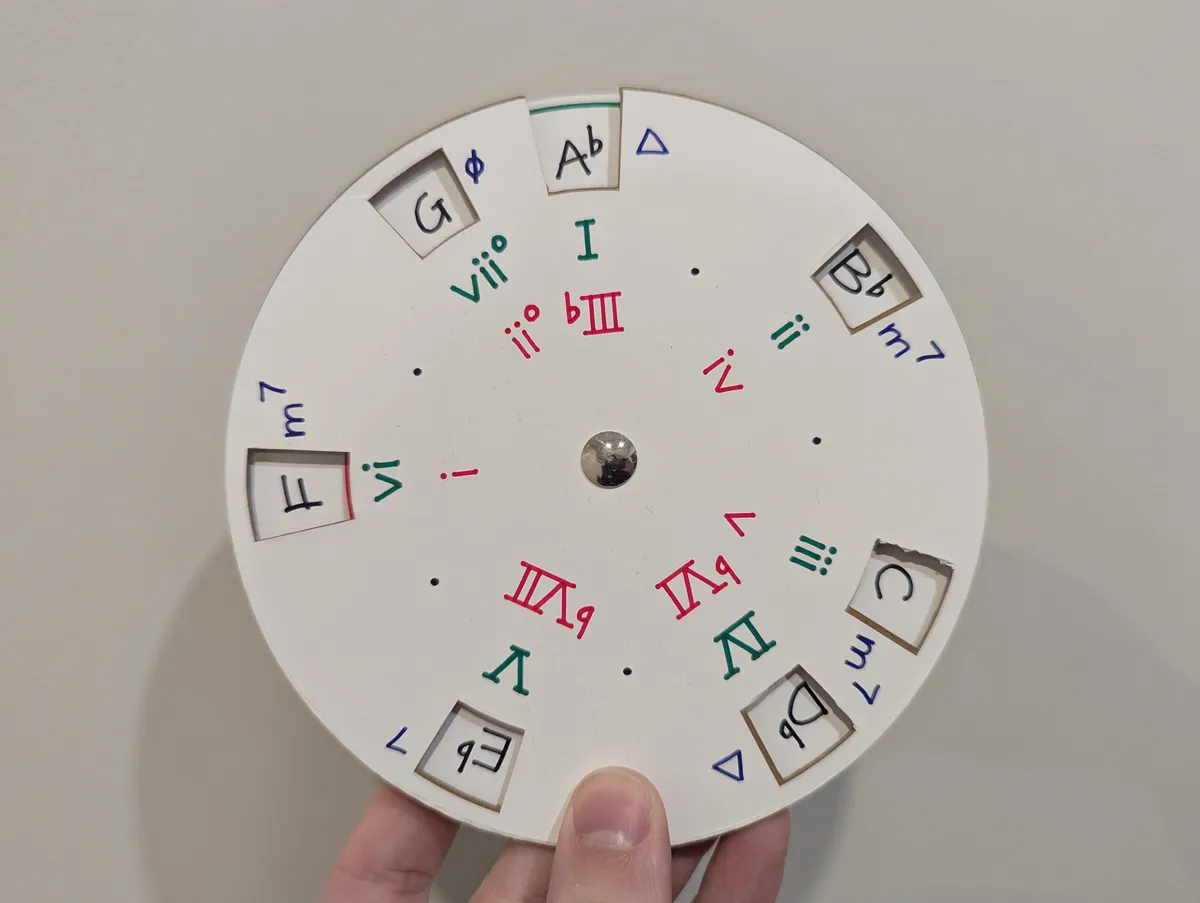
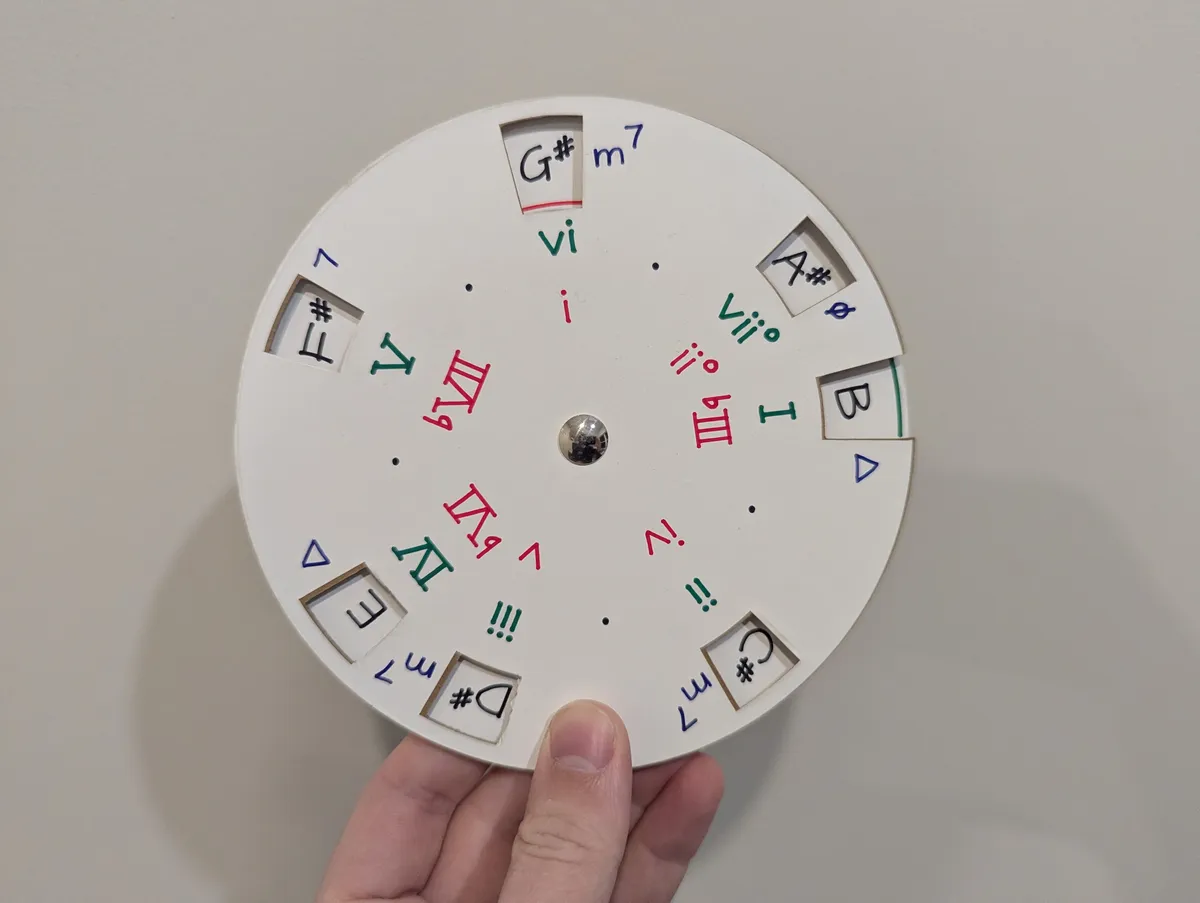
Although the project is designed for paper, I made this one with a craft cutter/plotter. It's matte vinyl paper on chipboard with felt pads to reduce friction. I'm hoping to laser cut one from acrylic next.
Philosophy
I taught music lessons at my local guitar store for a few years. (Buy local, and try before you buy!) Most of my students didn't know any theory coming in. For some, their goal was specifically to learn basic chord theory. I found myself diagramming a lot, writing out a circle of the 12 chromatic notes and showing intervals as distances around this clock face. Then we'd build scales from those intervals, chords within those scales, and so on.
It quickly became apparent that I needed something with moving parts. I approach theory like a math teacher (because I am one): where are the patterns, the symmetries? Because of relative pitch and octave equivalence, we can wrap the notes around into a circle and slide the scale and interval shapes
.
One wrinkle: enharmonic notes. Tools like this usually show both names for a note. The fourth note in the key of is . But in the key of , we call that same pitch by the name (or else the scale would have two notes with B
in the name). I wanted to encourage good practices of using the conventional name for each note in a given key, so I did something clever. Every note appears twice, with two different names if needed. The sharp
names alternate with flat
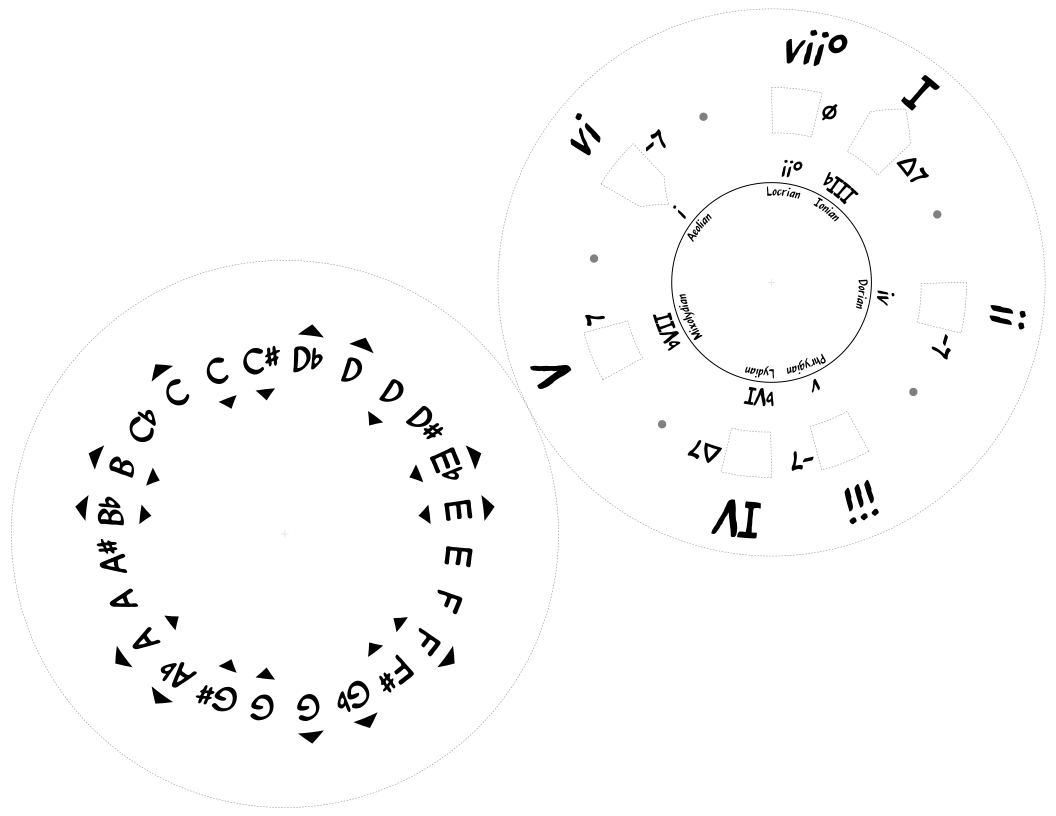
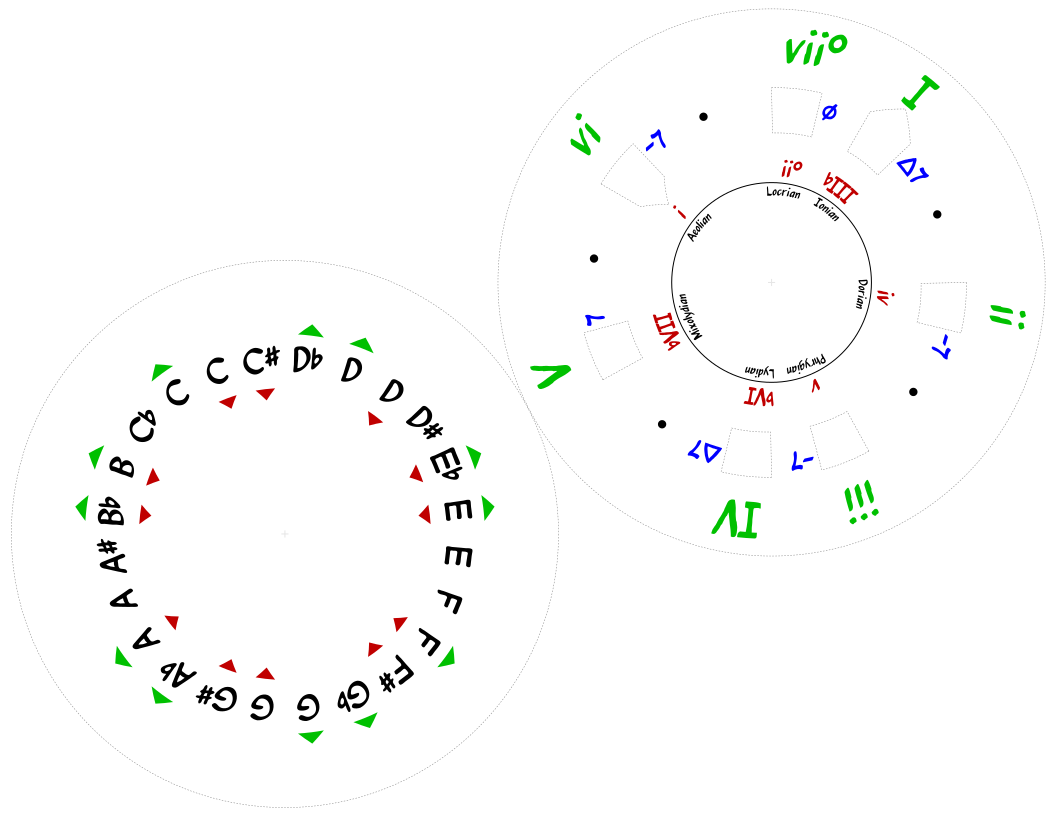
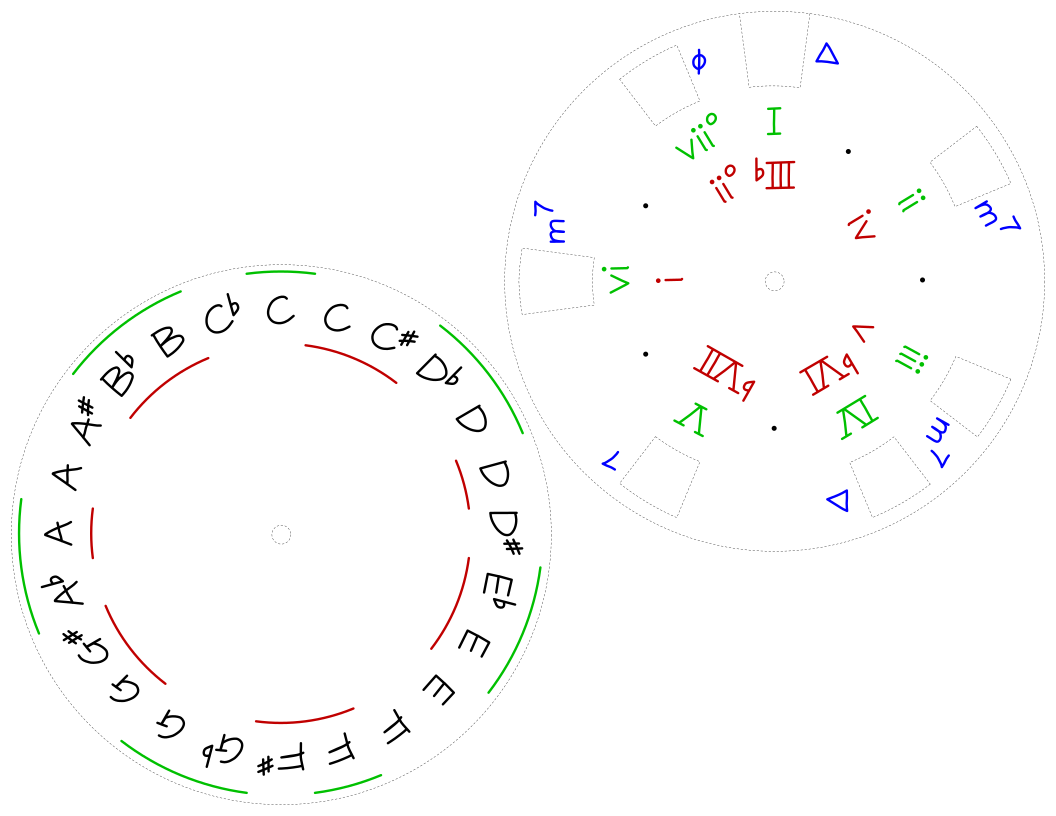
names. Arrows or colored lines (depending on the version) tell you whether you're on the correct copy of your root note.
The only compromise I had to make was with the key of major, A.K.A. major. Both names get used, but they don't both fit on the wheel. I chose since many transposing instruments like flat keys better than sharp ones even if they won't admit it.
Templates
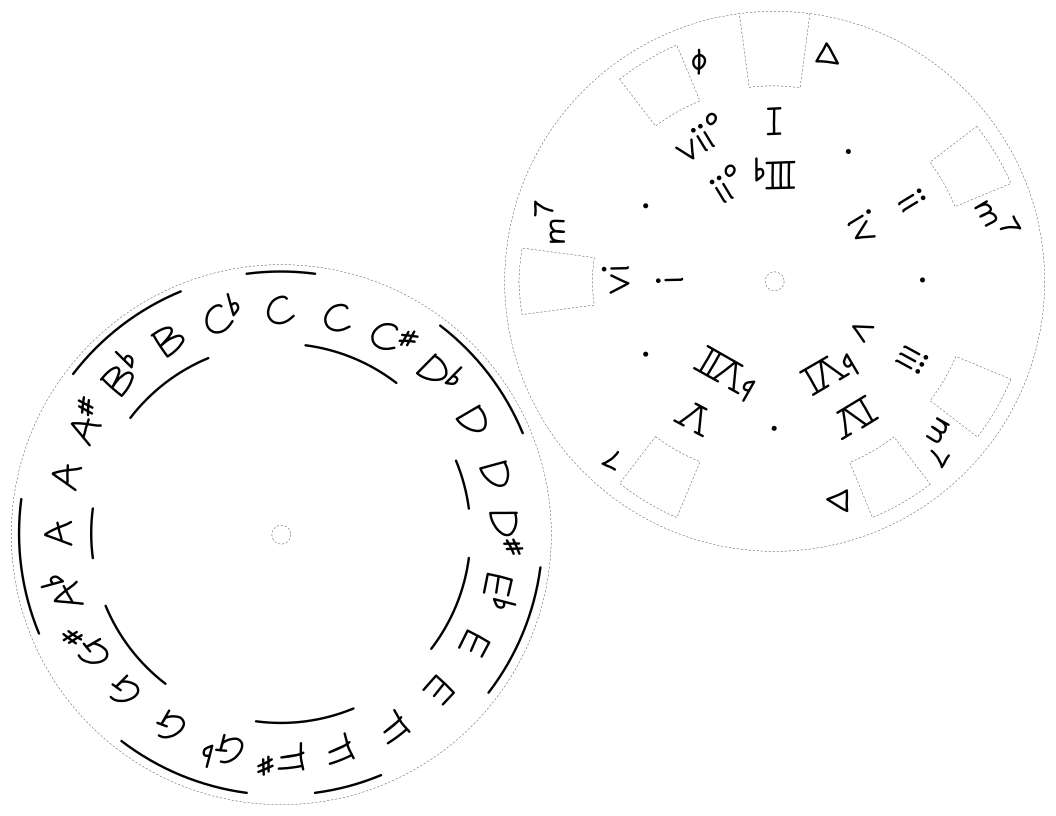
Print these svg images or a PDF from here. Feel free to customize, but please send me your modified versions at mr.dan.blog@pm.me so I can upload or link them here!

Instructions
How to build it
You will need:
- A printer (optional: color)
- A craft knife
- A brad or similar fastener
Steps
- Print your chosen template from above
- Cut along the dotted lines
- Place the wheel with the roman numerals on top of the one with the note names
- Fasten them together in the center using a brad
If the wheels spin freely, you're done!
How to use it
1. Choose a key. Turn the wheels until the desired root note has an arrow or colored line visible. For major keys, this will be a green line or outward arrow visible in the window labeled I. For minor keys, it will be a red line or an inward arrow, visible in the window labeled i.
2. Fix in place. If the wheels feel too loose, you may want to fix the wheels in place with a paperclip or clothespin.
3. Read the info.
- For a major key, the outer ring of roman numerals says the scale degrees.
- For minor keys, it's the inner ring.
- Regardless which ring you're reading, capital roman numerals mean major chords; lowercase are minor chords.
- The little numbers and symbols, which are blue in the color versions, are info about the chord qualities and especially about .
- means a dominant 7 chord
- means a minor 7 chord
- or means a major 7 chord
- means a half diminished chord
- Black dots stand in for notes that exist but aren't in the key; in major, these are the black keys of a piano.
Variations
- Use the blank template and puzzle through where to put the info yourself.
- Use an alternative fastener. You can use earring blanks from a craft store, a pin and a wine cork, or anything else that lets the wheels spin.
- Use a pushpin and fix your wheel onto a cork board.
- Instead of cutting out perfect circles, leave handles so you can spin the wheels more easily.
- Print onto sticker paper and adhere to a thicker backing. A short Chicago screw makes a nice fastener here.
- Make it stay with magnets! I haven't tried this yet, but my idea is to cut out 12 adhesive magnetic strips and position them near the diatonic notes. Then add a complementary strip at an appropriate spot on the upper wheel so it will hold in each of the 12 valid positions.